

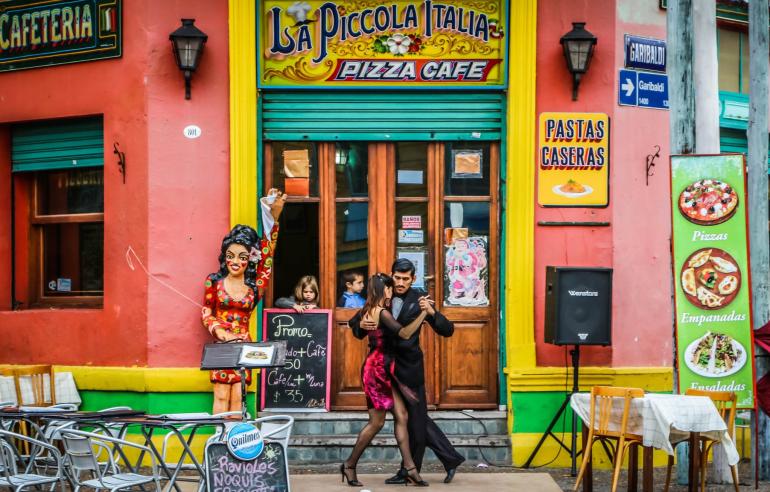
Tango’s Birthplace in La Boca
La Boca, settled in the 1840s by Italian immigrants, mostly from Genoa, became a melting pot of cultures in Buenos Aires’ port area. By the late 19th century, its tenements housed workers who blended African, European, and indigenous rhythms, giving birth to tango in the 1880s. The dance emerged in La Boca’s bars and brothels, a raw expression of longing and resilience, with icons like Carlos Gardel later immortalizing it.
Strolling Caminito: Tango in Motion
Start your walk at Caminito, La Boca’s iconic street, its brightly painted buildings—coated with shipyard paint by early residents—vibrating with color. Here, tango dancers appear as if summoned by the bandoneón’s wail. A couple sways, their steps sharp yet fluid, her dress flaring, his fedora tilted low. These impromptu performances echo the milongas of the 1900s, when tango moved from La Boca’s shadows to global stages.
Tango’s Living Legacy
Wander deeper, and tango feels alive in every corner. Murals of Gardel adorn walls, while street musicians play violins and accordions, prompting dancers to move on cobblestones. In small plazas, locals practice, from seasoned couples with decades of grace to young dancers testing bold steps. La Boca’s tango, recognized by UNESCO as an Intangible Cultural Heritage in 2009, bridges past and present.
Evening in La Boca
As dusk falls, the district glows under string lights. Bars along the waterfront spill tango music, hosting milongas where dancers’ silhouettes tell stories of love and loss. A couple’s dramatic performance—her leg extended, his gaze intense—captivates onlookers, reflecting tango’s enduring passion.
La Boca is tango’s heart, where history and dance intertwine. Visit with Argentine Tango TV to experience this UNESCO-recognized cultural gem in Buenos Aires. Plan your trip to explore tango’s roots and witness its living legacy.