
The Origins of the Bandoneon
The bandoneon, a type of concertina, was invented in Germany around the 1840s, with credit often attributed to Heinrich Band, though some sources suggest Carl F. Zimmerman as a contributor. Designed initially for sacred and popular music in churches and small halls, the instrument was not patented, leaving its early development shrouded in mystery. By the 1870s, German and Italian immigrants and sailors brought the bandoneon to Argentina, where it found a new home in the burgeoning Tango scene of Buenos Aires’ working-class neighborhoods. Its melancholic, expressive sound perfectly matched the emotional depth of Tango, a genre born from a fusion of African, European, and indigenous influences, including milonga, habanera, and candombe rhythms.
By 1910, German manufacturers, notably Alfred Arnold, were producing bandoneons specifically for the Argentine and Uruguayan markets, with 25,000 instruments shipped to Argentina in 1930 alone. Alfred Arnold’s “AA” model, featuring 71 buttons and 142 tones, became the preferred choice for Tango musicians due to its rich, resonant sound. However, World War II disrupted German production, and by the 2000s, vintage bandoneons had become rare and expensive, prompting efforts like the National University of Lanús’ project to create affordable Argentine-made bandoneons, nicknamed “pichuco” after Aníbal Troilo.
The Bandoneon’s Role in Argentine Tango Compositions
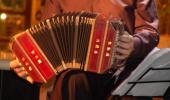
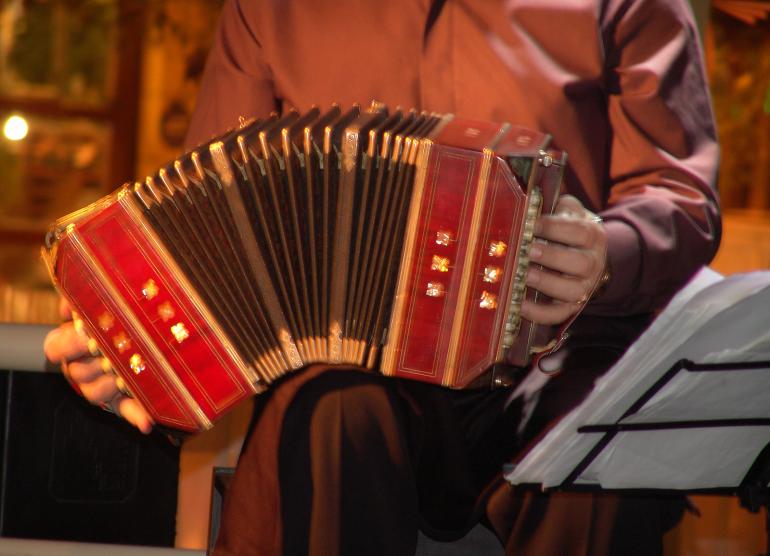
The bandoneon is the heartbeat of Argentine Tango, providing its distinctive, soulful sound that captures the genre’s themes of nostalgia, longing, and passion. Unlike the accordion, the bandoneon has no predefined chords and features a complex layout of 37 buttons on the right hand and 33 on the left, with each button producing different tones when the bellows are pushed or pulled. This bisonoric quality allows for dynamic, expressive playing, with the left hand producing a nasal, muted timbre and the right hand delivering bright, sharp notes.
In Tango compositions, the bandoneon leads the melody in the orquesta típica, a traditional ensemble that typically includes two violins, two bandoneons, a piano, and a double bass. Its ability to shift between legato and staccato, combined with techniques like varying bellows pressure, makes it ideal for conveying the emotional intensity of Tango. The instrument’s melancholic resonance complements the genre’s lyrical themes, often centered on love, loss, and the struggles of immigrant life. Iconic compositions like Ángel Villoldo’s “El Choclo” (1903) and Ástor Piazzolla’s “Adiós Nonino” showcase the bandoneon’s versatility, blending traditional Tango rhythms with jazz and classical influences.
Historical Facts About the Bandoneon in Tango
-
Introduction to Argentina (1870): The bandoneon was first documented in Buenos Aires in 1870, brought by an Englishman named Tomas Moore. It initially faced resistance from musicians accustomed to the brighter, staccato sounds of flute, violin, and guitar trios.
-
Acceptance in the Early 1900s: Juan Maglio “Pacho” played a crucial role in popularizing the bandoneon, performing in brothels and cafés before recording with Columbia Records in 1912. His success led to the term “Pacho” becoming synonymous with recordings.
-
Golden Age of Tango (1930s–1950s): The bandoneon became central to Tango’s Golden Age, with orchestras led by figures like Juan D’Arienzo and Aníbal Troilo defining the genre’s sound. The sexteto típico, established by Julio De Caro in the 1920s, standardized the bandoneon’s role in ensembles.
-
Post-WWII Decline and Revival: After World War II, German bandoneon production ceased, making instruments scarce. A revival in the 1980s, sparked by shows like “Tango Argentino,” and UNESCO’s 2009 recognition of Tango as Intangible Cultural Heritage, renewed interest in the bandoneon.
-
Modern Innovations: Contemporary efforts, such as the National University of Lanús’ “pichuco” project, aim to make bandoneons more accessible, while new technologies explore durable, affordable designs without sacrificing sound quality.
Famous Bandoneon Players: Past and Present
Past Masters
-
Juan Maglio “Pacho” (1881–1934): A pioneer who brought the bandoneon to prominence in Tango, Pacho’s recordings, like “Armenonville” (1912), set the stage for the instrument’s acceptance. His performances in Buenos Aires’ cafés drew large crowds, cementing his legacy.
-
Aníbal Troilo (1914–1975): Known as “Pichuco,” Troilo was a bandleader, composer, and virtuoso whose expressive playing defined Tango’s Golden Age. His works, such as “Pa’ que bailen los muchachos,” showcased the bandoneon’s emotional depth.
-
Ástor Piazzolla (1921–1992): A revolutionary figure, Piazzolla created “nuevo tango,” blending Tango with jazz and classical music. His compositions, like “Fugata” and “Adiós Nonino,” elevated the bandoneon to concert stages worldwide.
-
Pedro Laurenz (1902–1972): A key figure in Julio De Caro’s sextet, Laurenz’s innovative bandoneon techniques influenced the rhythmic complexity of Tango during the Golden Age.
Contemporary Players
-
Rodolfo Mederos (b. 1940): A modern maestro, Mederos continues to perform and compose, blending traditional Tango with contemporary styles. His work preserves the bandoneon’s soulful essence while exploring new genres.
-
Heyni Solera: A GRAMMY-nominated bandoneonist, Solera performs with ensembles like La Poesia, bringing Tango’s traditional sound to new audiences.
-
Damián Guttlein: Renowned as the only bandoneon tuner who tunes by ear, Guttlein’s workshop in San Martín is a pilgrimage site for musicians. His expertise ensures the instrument’s authentic sound endures.
-
Leopoldo Federico (1927–2014): Though he passed recently, Federico’s later works, like “Éramos tan jóvenes,” kept the bandoneon central to Tango’s revival, influencing modern players.
The Bandoneon’s Cultural Significance
The bandoneon is more than an instrument; it’s a cultural symbol of Argentina, embodying the nation’s immigrant history and emotional depth. Its integration into Tango transformed the genre, giving it a voice that resonates with themes of longing and resilience. UNESCO’s recognition of Tango in 2009 underscores the bandoneon’s role in Argentina’s cultural identity. Today, the instrument is celebrated in Tango festivals worldwide and incorporated into modern genres like rock, pop, and trap, as seen in performances by artists like Bizarrap and Nicki Nicole.
Conclusion
The bandoneon’s journey from a German church instrument to the heart of Argentine Tango is a testament to its versatility and emotional power. Its unique sound has shaped iconic compositions, from the proto-tangos of the 19th century to Piazzolla’s nuevo tango. Historical figures like Juan Maglio and Aníbal Troilo, alongside contemporary artists like Rodolfo Mederos and Heyni Solera, have ensured the bandoneon’s legacy endures. As efforts to produce affordable bandoneons continue, this iconic instrument will remain the soulful pulse of Argentine Tango, captivating audiences worldwide.
Call to Action: Want to experience the bandoneon’s magic? Explore Tango festivals, listen to classic recordings by Troilo or Piazzolla, or visit Buenos Aires to hear its melancholic strains in a milonga. Share your favorite Tango composition in the comments below!